Types of Gordons
Like it or not, in North America there are different types of Gordon Setters: Show – Dual – Field. This situation will probably never change because people breed to win in their field of endeavour. The Canadian Kennel Club breed standard instructs judges to favour larger and heavier dogs, the Field Trialers (competitive hunters) require a smaller, stylish (high head, very high tail), more athletic dog with better endurance to win their events.
Show Dogs
Larger with more coat. The adult male can weigh well over 70lb (32kg) and can stand over 26 inches (66cm). The feathering can be extensive requiring fairly frequent combing and/or trimming. Some clipping may be desired. They are very beautiful and may be supremely dignified or foolish when playing .
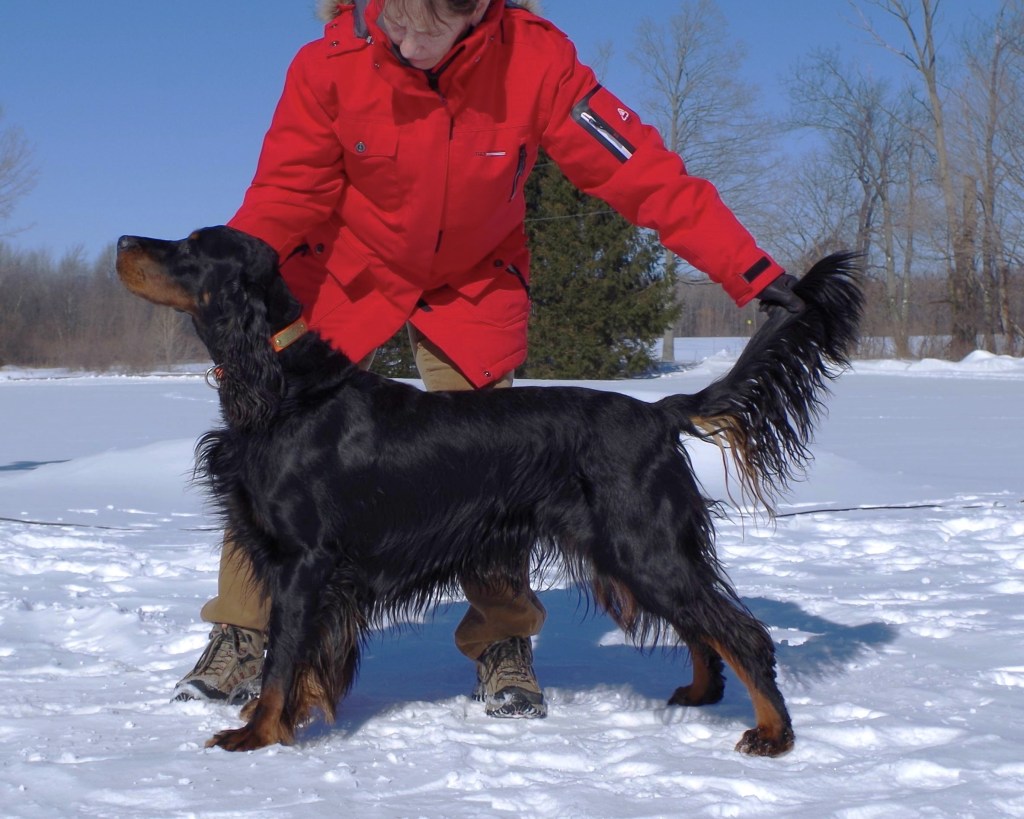
Strider – Show type
25.5 inches, 78lb
They may sacrifice some endurance and agility the bigger and heavier they get compared to the smaller dog. They tend to pick up lots of woodsies and burrs when running in the field which may take fair effort to remove. Feathers can always be trimmed or cut altogether if grooming requirements become too time-consuming. They may feel the heat sooner when exercising in summer.
Their tails are held below the horizontal, level or just above the horizontal unlike the field dogs. Tail feathers may be silvery in the young dog though this disappears with age mostly. White markings should not be found other than a small spot on the chest.
Dual Dogs
Moderate sized and in my opinion, closer to the original breed description (and the current UK breed standard). The adult male weighs between 55-65 lb or so, stands 23-25 inches, tends to have less bone and is less ponderous . The feathering is more moderate and requires less attention though certainly still needs trimming. They retain the characteristic quality of dignity and are extremely versatile, doing well in field work, agility, obedience and so on.
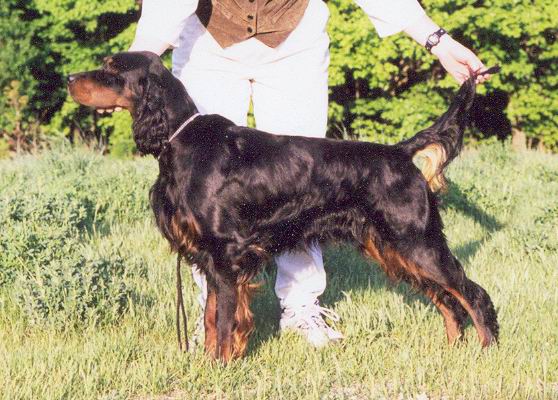

They can win in the show ring though are at a disadvantage being smaller. They can win in the field, able to cover ground more efficiently than the larger dogs but mostly not as flashy a mover as the field dog. They tend to resemble the profile of the show dog when pointing a bird(lower head and tail) so are less ‘stylish’ than the Field Dogs, a disadvantage here.
Field Dogs
The smallest, fastest, least feathered type of Gordon. The adult male weighs 45-55lb, standing 22-24 inches. They are wiry and very light on their feet. Grooming requirements are much reduced with the lighter coat.
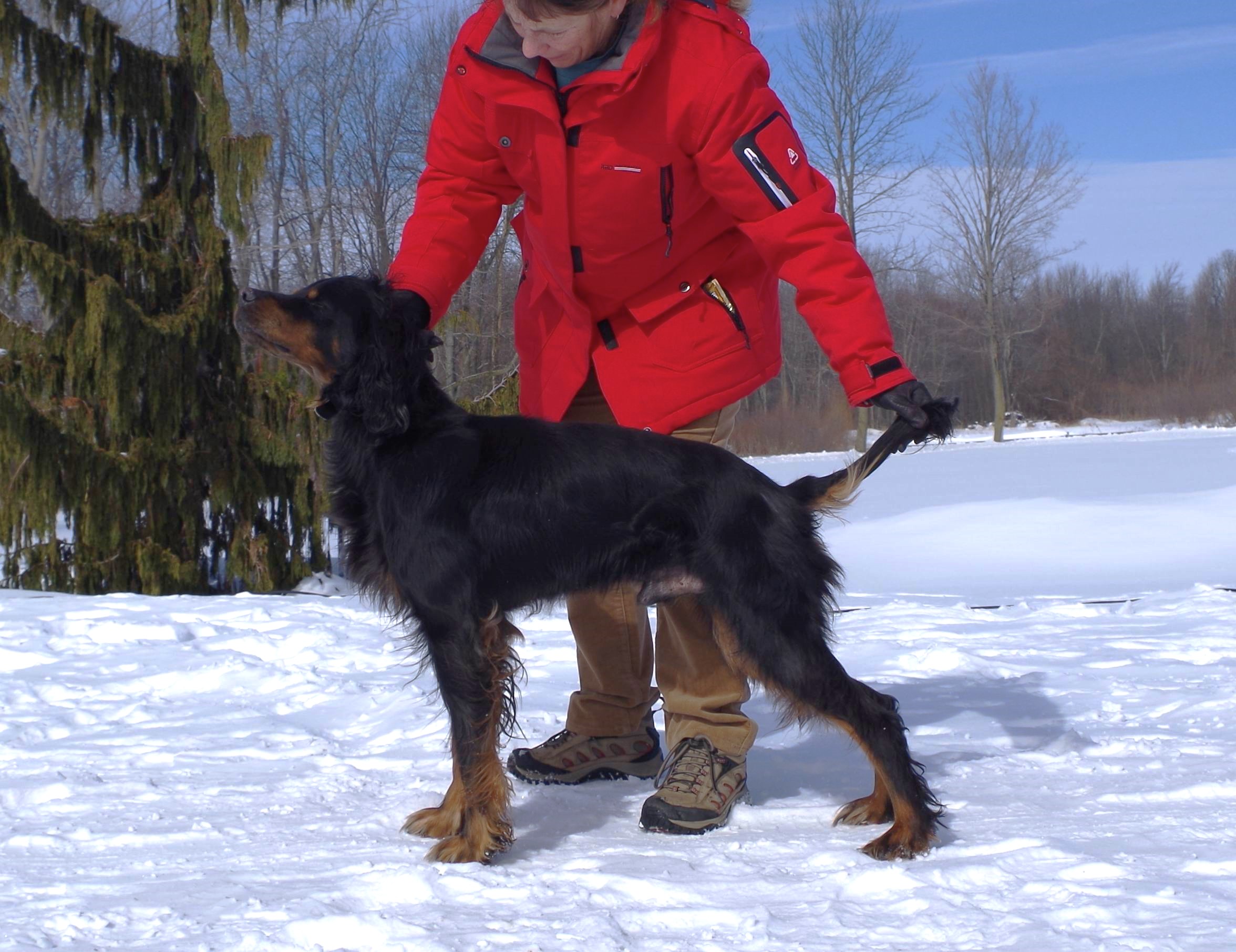
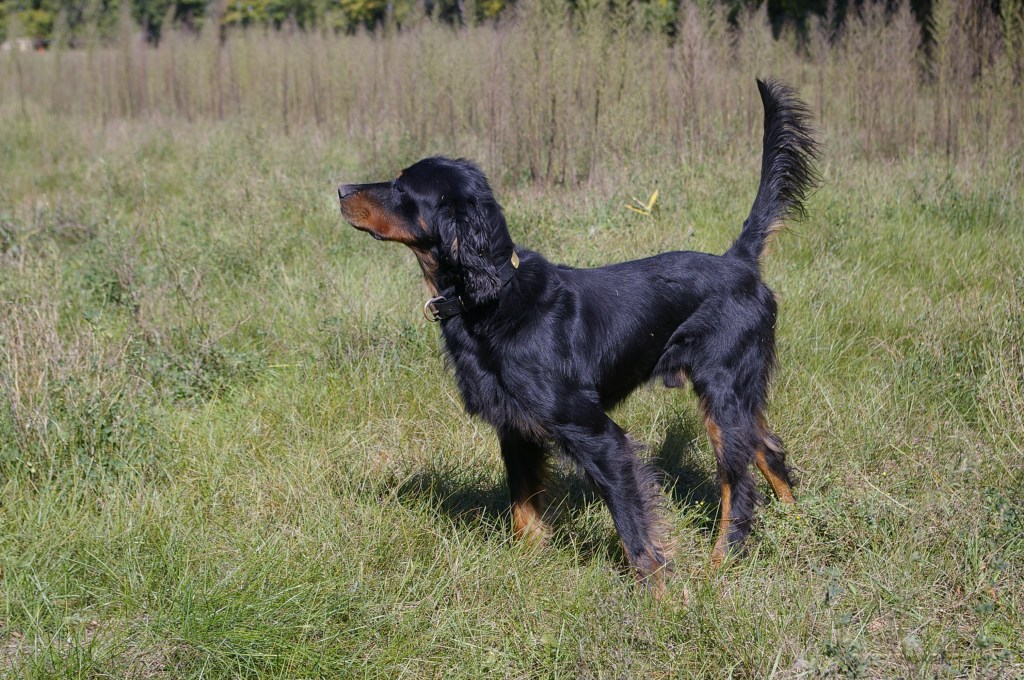
They have a high tailset and headset. There is always a question as to how breeders managed to alter the original level tailset to the ’12 o’clock’ or full vertical tail. There can also be large patches of white and I have seen ticking, white paws etc. These dogs do not conform to breed standards and would not be expected to succeed in the show ring in fact if they showed more white, they would be disqualified.
To my eye this type has lost some of the dignity, the regal nature of the setter. I can’t argue that in general it is a dynamo in the way it runs in the field compared to most larger dogs.
Other Thoughts
Regardless of type, Gordons are loyal and intelligent, supreme companions with a huge personality that grabs you as you come to know them. They are rare and I consider them some of the ‘unfound treasures’ of the dog world for active, playful people to enjoy. The smaller size is an asset for some pet families and may have other advantages.
Larger dogs may be more prone to BLOAT or stomach twist, or gastric torsion, an extreme life-threatening event to deep chested dogs. I have known of several dogs afflicted, some have survived surgery and others have not. (See health issues)
All types of Gordons are HUNTERS, bird dogs. They run, they hunt, they chase… right into traffic. This is another leading cause of disaster and constant care is required to reduce this danger.
Larger dogs tend to live a shorter life. They may be more prone to cancer, arthritis, back problems and injuries.
 Bracadale Gordon Setters
